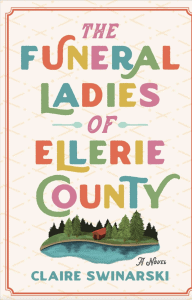
Book Review: The Funeral Ladies of Ellerie County
A Perspective for Women Who Understand the Power of Showing Up
In my years as a funeral service professional, I’ve learned that the most meaningful acts of care rarely come from formal arrangements—they come from the women who walk in carrying casseroles, who quietly organize kitchens, and who understand that grief and nourishment are deeply connected. The Funeral Ladies of Ellerie County captures this truth with warmth, authenticity, and a deep respect for generational caregiving that will resonate strongly with women 50 and older.
At the center of this story is Esther Larson, a matriarch in every sense of the word. For seventy years, Esther has been part of the “funeral ladies” of Ellerie County, a group of women devoted to feeding the grieving and preserving a tradition that is as healing as it is practical. Her philosophy is simple and deeply familiar: very little cannot be softened by a warm casserole and a slice of cherry pie. It’s not just about food—it’s about presence, consistency, and love expressed through action.
Esther represents a generation of women who built communities through quiet service. She is the keeper of rituals, the one who knows what dish to bring, when to arrive, and how to hold space without overwhelming it. And yet, the novel wisely turns the lens: even the strongest matriarchs are not immune to vulnerability. After falling victim to an internet scam that threatens her home, Esther finds herself in an unfamiliar position—needing the very support she has spent a lifetime giving.
Enter Iris, her granddaughter, and one of the most compelling aspects of the book. Iris is whip-smart, observant, and part of a generation that both questions and inherits tradition. She watches as people her age leave their small Northwoods town in search of something bigger, while she feels tethered to a place she deeply loves but doesn’t fully understand her role within.
What makes this story especially meaningful is the repetition of love and duty between Esther and Iris. Iris may not initially see herself as one of the “funeral ladies,” but her instincts tell another story. She steps in when needed, she cares deeply about her community, and she begins to mirror Esther’s quiet strength in ways that feel both natural and inevitable. This is how legacy works—not through instruction, but through example.
The introduction of Cooper Welsh adds another layer of emotional depth. Carrying his own grief and responsibility, he arrives in Ellerie County searching for stability and healing. His connection with Iris feels grounded in shared longing—for home, for purpose, for belonging. Together, their stories highlight something I’ve seen often in my profession: that grief, when met with community and care, can become a bridge rather than a barrier.
One of the most unique and symbolic elements of the novel is the community cookbook. At first glance, it may seem quaint—even outdated—but it becomes a powerful metaphor. These recipes, heavy on casseroles and familiar ingredients, represent continuity. They are tangible expressions of memory, tradition, and love passed down through generations. For many women, especially those who have hosted, cooked, and comforted others in times of loss, this will feel deeply personal.
From a professional standpoint, the book beautifully illustrates the partnership between formal funeral care and community-based support. Funeral homes may guide the service, but it is women like Esther—and eventually Iris—who sustain the healing long after the service ends.
For women 50+, this novel offers both recognition and reassurance. It honors the role of the matriarch while also showing how that role evolves and continues. It reminds us that even as times change, the fundamental acts of care—feeding, gathering, showing up—remain essential.
The Funeral Ladies of Ellerie County is ultimately a story about legacy, resilience, and the quiet, repeated acts of love that bind generations together. It doesn’t just tell a story—it reflects a lived truth many women will recognize in their own lives.